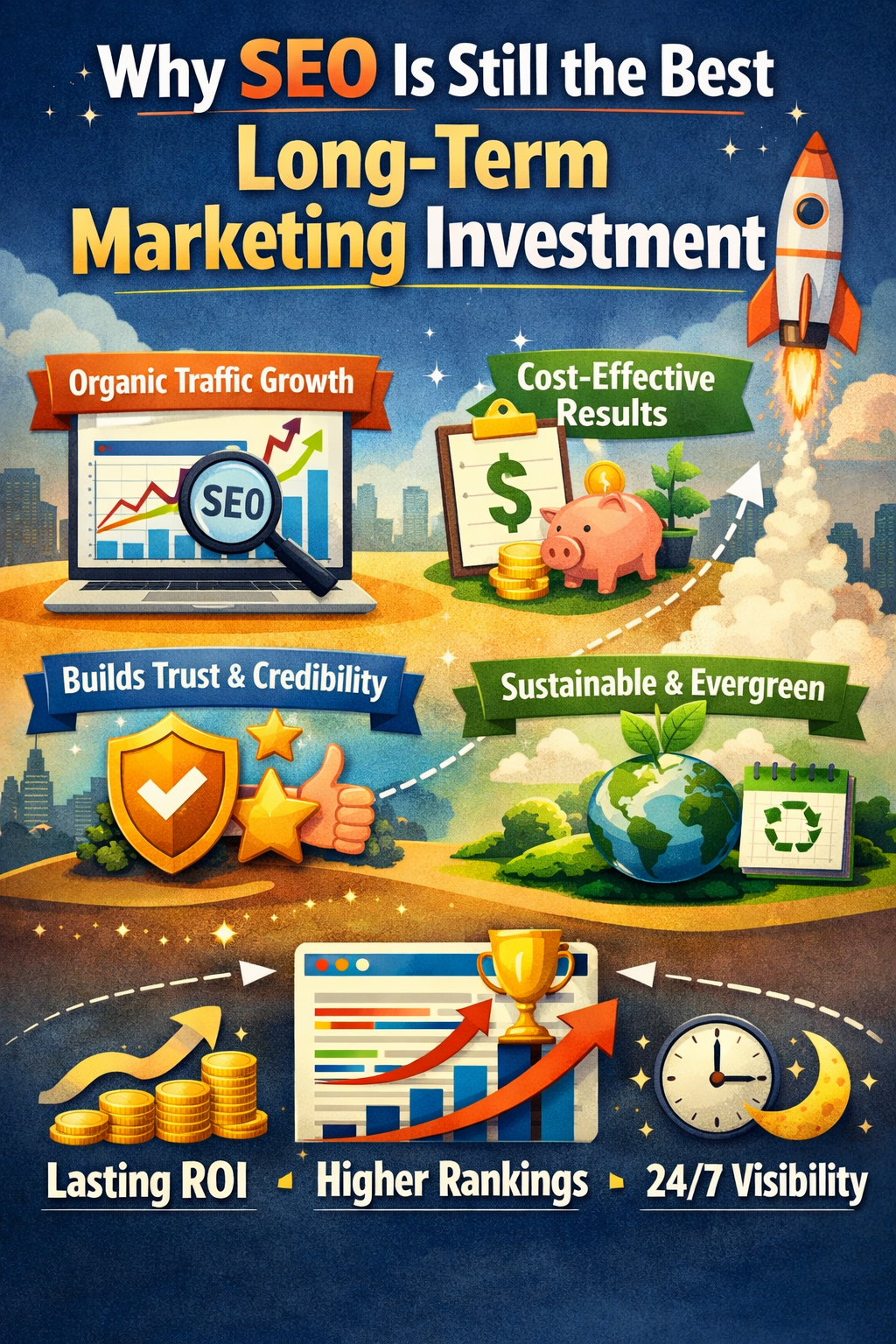
Why SEO Is Still the Best Long-Term Marketing Investment
In an era where digital marketing trends change rapidly—new social platforms emerge, ad costs rise, and algorithms evolve—it’s easy to question which strategies truly stand the test of time. Yet despite constant change, search engine optimization (SEO) continues to outperform most marketing channels when it comes to long-term value. Businesses that invest in SEO aren’t just chasing short-term visibility; they’re building a durable foundation for sustained growth.
SEO Builds Compounding Value Over Time
One of the biggest advantages of SEO is its compounding effect. Unlike paid advertising, which stops delivering traffic the moment budgets are paused, SEO efforts can continue generating results long after the initial work is done. High-quality content, optimized site structure, and authoritative backlinks can deliver consistent organic traffic for months—or even years.
This long-term impact makes SEO fundamentally different from most outbound tactics. A well-optimized page can rank, attract visitors, and convert users without ongoing spend, making SEO marketing one of the most cost-effective digital strategies available.
Organic Search Still Dominates Buyer Intent
Search engines remain the primary way people find information, compare solutions, and make purchasing decisions. When users type a query into Google, they’re often expressing direct intent—seeking answers, services, or products right now. Ranking organically for these queries puts brands directly in front of users at the exact moment they’re looking.
While social media and display advertising can raise awareness, SEO captures demand that already exists. This makes it especially powerful for businesses focused on long-term lead generation rather than fleeting attention.
Trust and Credibility Are Built Into SEO
Users tend to trust organic search results more than paid ads. High rankings signal authority, relevance, and credibility—qualities that are difficult to buy instantly. Consistently appearing in top search results reinforces brand legitimacy and positions a business as a reliable source of information.
This trust compounds over time. As users repeatedly encounter a brand through organic search, familiarity grows, improving click-through rates and engagement. Few other marketing channels offer this level of built-in credibility.
SEO Supports Every Stage of the Customer Journey
Another reason SEO remains a strong long-term investment is its versatility. It supports the entire customer journey—from awareness and consideration to decision-making and retention. Educational blog content can attract early-stage users, while optimized service pages and product content capture high-intent traffic closer to conversion.
Additionally, SEO insights—such as keyword data and user behavior—can inform broader marketing strategies, helping businesses better understand their audience and refine messaging across channels.
Also Read – ChatGPT for SEO
Algorithm Changes Favor Quality and Longevity
While search engine algorithms do evolve, their long-term direction has remained consistent: prioritize quality, relevance, and user experience. Businesses that focus on producing helpful content, improving site performance, and earning genuine authority are less vulnerable to volatility than those relying on short-term tactics.
This emphasis on quality ensures that SEO rewards sustained effort rather than quick wins, making it a stable investment even as digital landscapes shift.
A Sustainable Strategy in an Uncertain Market
As ad platforms become more competitive and expensive, businesses are increasingly looking for sustainable alternatives. SEO offers predictability, scalability, and long-term returns that few other channels can match. It doesn’t replace paid media or social strategies—but it strengthens them by providing a reliable backbone for digital growth.
In a world where marketing budgets are scrutinized more than ever, SEO continues to prove its value not through hype, but through consistent, measurable results over time.

